20 / 02 / 2026
WHO releases consolidated operational handbook to strengthen STI services worldwide

On 12 February 2026, the World Health Organization (WHO) announced the launch of its first consolidated operational handbook on sexually transmitted infections (STIs), aimed at helping countries improve prevention, diagnosis, treatment and care across health systems.
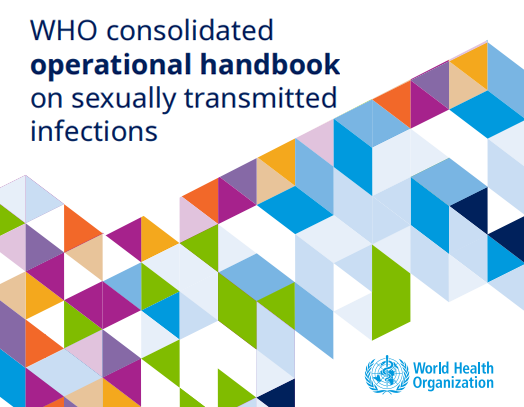
WHO consolidated operational handbook on sexually transmitted infectionsWorld Health Organization, 2026 (EN)

As reported by WHO, the new handbook provides practical, program-level guidance for policymakers, programme managers, clinicians and community organizations. It translates existing WHO recommendations into operational steps that can support the integration of STI services into primary health care and universal health coverage frameworks, and help countries sustain high-quality services.

The publication responds to a growing global need for coordinated action. More than 1 million curable STIs are acquired every day worldwide, and syphilis cases continue to rise – reaching an estimated 8 million in 2022, including around 700,000 cases of congenital syphilis. Against this backdrop, WHO emphasizes the importance of clearer implementation guidance that can help countries move from fragmented responses to integrated, people-centred STI services.

The handbook brings together WHO normative and operational guidance published between 2016 and 2025 into a single reference document. Among its key components, it: 

  • consolidates guidance on STI prevention, diagnosis, treatment, surveillance and service delivery in one operational resource;
  • introduces an STI prevention and care cascade to map engagement with health systems and identify service gaps;
  • provides package-based approaches for integrating STI services into primary health care, HIV programmes, sexual and reproductive health services, and maternal, adolescent and community platforms;
  • addresses antimicrobial stewardship and resistance, including guidance aligned with the global response to drug-resistant gonorrhoea;
  • includes implementation considerations for emerging interventions such as doxycycline post-exposure prophylaxis and mpox vaccination for populations at higher risk;
  • situates STI service delivery within the context of sustainable financing and the transition from external donor support to greater domestic investment.

According to WHO, the handbook is intended as a practical tool to help countries strengthen STI responses, improve service quality and ensure equitable access to prevention, testing and treatment for all populations.